Regarding the ultimate level of automotive intelligence, the current industry consensus is that fully autonomous driving (L4/L5) is the ultimate goal of technological development. At that stage, the car will evolve from a mere means of transportation into a highly intelligent “mobile space.”
However, this path is gradual. The table below outlines the different levels of autonomous driving and their characteristics, helping you understand the current position and future direction.
| Level | Name | Responsible Party | Core Characteristics |
|---|---|---|---|
| L2 | Partial Automation | Human Driver | The system can simultaneously control steering and acceleration/deceleration (e.g., Adaptive Cruise Control + Lane Keeping) under specific conditions, but the driver must monitor continuously. |
| L3 | Conditional Automation | System & Driver | Under specific conditions, the system performs all driving tasks. The driver must be prepared to intervene when requested. This is the critical point of responsibility transfer. |
| L4 | High Automation | System | Within defined operational domains and scenarios (e.g., Robotaxi geofenced areas, closed campuses), the vehicle can perform all driving tasks without human intervention. |
| L5 | Full Automation | System | The vehicle can perform all driving tasks under all road and environmental conditions, anytime, anywhere. This is the ultimate form of autonomous driving. |
Please note: The definitions in the table above are primarily synthesized from publicly available online information and are intended to provide a clear reference framework. For the most authoritative standard, please refer to SAE International’s J3016 standard.
🗺️ Current Progress and Future Challenges
Currently, we are in a critical period of transitioning from driver assistance (L2/L2+) to high-level autonomous driving.
- Current State: L2 driver assistance is rapidly becoming widespread. According to data from the China EV100 in mid-2025, the penetration rate of L2 systems in new cars in China had already exceeded 50%. Functions like Urban NOA (Navigation Guided Pilot) allow vehicles to automatically start/stop, change lanes, and navigate around obstacles on complex urban roads, indicating the technology is moving from controlled highways to open city environments.
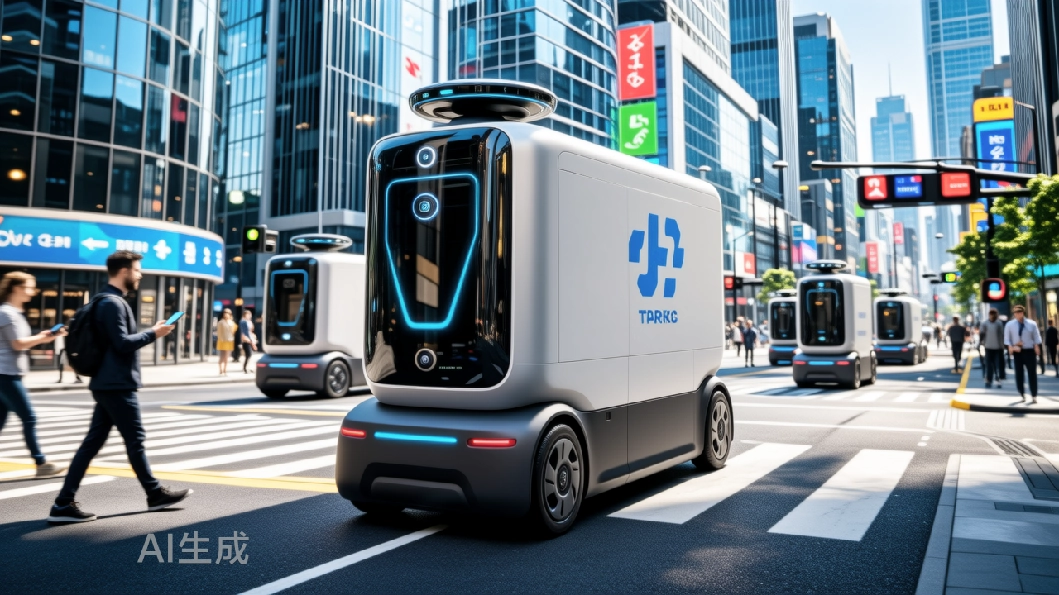
- High-Level Autonomous Driving (L4): Has already been deployed in specific scenarios. Examples include Robotaxis operating in designated autonomous driving demonstration zones (like Beijing’s Yizhuang and Shanghai’s Jiading) as well as unmanned delivery vehicles. This is currently considered the most pragmatic and feasible path to commercialization.
- Main Challenges: Achieving the ultimate goal of L4/L5 still requires overcoming several hurdles:
- Technical Bottlenecks: How to reliably handle extreme weather and recognize “never-before-seen” obstacles (corner cases).
- Cost and Regulation: High R&D costs, and the need to establish legal frameworks for accident liability, data security, and privacy.
- Social Acceptance: Building public trust and acceptance of “driverless” vehicles takes time.
🧠 The Future Vision of Intelligence
When automotive intelligence reaches an advanced or ultimate stage, the travel experience will be completely transformed:
- From “Driving Tool” to “Mobile Living Space”: The car interior will no longer be a cockpit but your mobile office, living room, or entertainment room. During your commute, you can work, watch movies, or rest peacefully, completely freeing up your time.
- Possessing Generalizable Intelligence that “Infers Broadly”: Future vehicle AI will resemble an experienced “veteran driver.” Using large model technology, the vehicle will not just rigidly follow traffic rules but will also understand and predict the intentions of other road users. It will engage in reasonable social interaction, such as at unsignalized intersections, and calmly handle complex road situations it has never encountered before.
- Achieving Integrated “Vehicle-Road-Cloud” Coordination: Vehicles will no longer be information silos. Through 5G and V2X (Vehicle-to-Everything) technology, vehicles, other vehicles, road infrastructure (like traffic signals, roadside sensors), and cloud platforms communicate in real-time, forming a safer and more efficient intelligent transportation system.

In summary, the ultimate goal of automotive intelligence is to achieve fully autonomous, safe, and efficient driverless transportation. In the process, the car is being redefined as an intelligent mobile space that understands your needs and proactively serves you.
What type of intelligent driving technology or future mobility scenario are you most interested in?