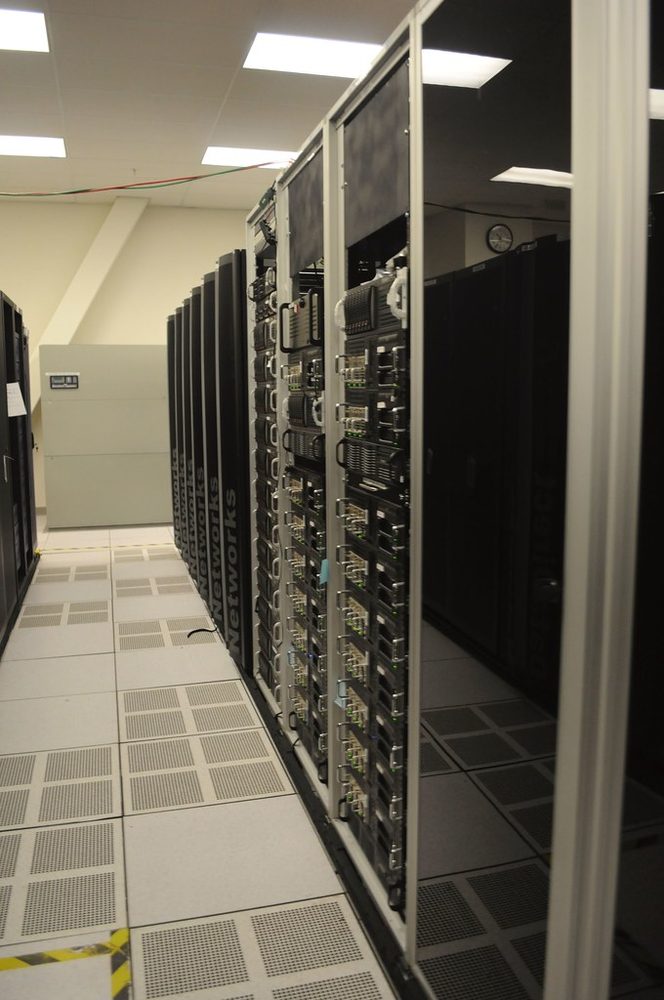
Precision air conditioning is not one single product type. It describes a class of cooling systems designed to hold temperature and humidity within a controlled range for sensitive environments. When a data center project says precision air conditioner, it may mean a room-level CRAC, a chilled-water unit, a row-based cooler, or a rack-mounted unit. Each configuration changes how air is delivered and where heat is removed.


1. Room-Level Self-Contained CRAC
A computer room air conditioner (CRAC) is a packaged room-level unit with its own compressor, evaporator, condenser connection, and control system. Air is supplied from the unit into the room, usually through the floor or ceiling, and returned to the top or front of the unit. This is the traditional approach for medium server rooms.
CRAC units can be air-cooled, water-cooled, or glycol-cooled depending on the building. Their advantage is a simpler installation when chilled water is not available. The limitation is that they condition the whole room, so airflow and rack layout must be managed carefully.
2. Chilled-Water Room-Level CRAH
A computer room air handler (CRAH) uses chilled water supplied by a central chiller plant instead of its own compressor. It contains large fans and a cooling coil and is well suited to facilities that already have a chilled-water system or need centralized heat rejection.
The direct comparison between chilled-water and direct expansion cooling affects capital cost, redundancy, maintenance, and energy performance. A chilled-water system can be very efficient at scale, but it depends on the chilled-water plant remaining available.
3. Row-Based Cooling
Row-based precision cooling units mount between or beside racks and deliver conditioned air directly to the hot or cold aisle. They reduce the travel distance between the cooling coil and server inlets, which helps high-density deployments keep inlet temperatures stable.
Row-level systems often include intelligent fan control and can be staged with the rack load. They make sense when heat density is uneven or when containment is used to separate hot and cold air.
4. Rack-Level or Cabinet Cooling
Rack-level cooling is integrated into or attached to an individual cabinet. It is useful for high-density racks, edge deployments, and sites where room-level airflow cannot keep one cabinet within range. Cabinet units cool a smaller air volume, which allows a faster response to load changes but adds more equipment per rack.
The practical benefits and limits of this approach are covered in our guide to cabinet air conditioner benefits.
5. Small Split Systems
A split precision air conditioner has an indoor unit and an outdoor condensing unit connected by refrigerant lines. Split systems are common for small server rooms, telecom rooms, laboratories, archives, and edge sites because they do not require a dedicated plant room.
They are simpler to install in existing buildings, but the outdoor unit location and line length matter. Indoor and outdoor units should be close enough to keep refrigerant pressure drop and installation risk acceptable.
6. Free Cooling and Central Air Handling Solutions
Some facilities use central air handling with economizer or free-cooling capability. During cool outdoor conditions, the system can reduce mechanical compressor operation while still maintaining the required supply temperature. This configuration is most relevant when a building already has central HVAC infrastructure or when energy efficiency is the primary driver.
Free cooling is not always the answer for humid climates or for spaces that need strict humidity control. The energy benefit depends on local weather, the cooling setpoint, and the amount of fresh air introduced.
How to Choose a Configuration

- Start with rack heat load and room heat load
- Identify the maximum acceptable inlet temperature range
- Decide whether chilled water is available
- Check room dimensions, ceiling, floor plenum, and outside space
- Evaluate redundancy and maintenance access
- Compare energy use over the expected operating range
A precision air conditioner sizing guide should be used before choosing equipment. The best configuration is the one that keeps inlet temperatures within limits at full and partial load, not simply the largest unit that fits the room.
Часто задаваемые вопросы
What is the difference between CRAC and CRAH?
A CRAC contains its own refrigeration compressor, while a CRAH uses chilled water supplied by a central plant. The choice depends on site infrastructure, energy strategy, and redundancy requirements.
Are row-based units better than room-level units?
They can be better for high-density racks because they deliver cool air closer to the load. Room-level units may be simpler and more cost-effective for evenly loaded rooms.
Can one precision air conditioner type work for every server room?
No. The best type depends on heat load, building infrastructure, humidity control needs, available space, and redundancy strategy.
Нужна помощь в оценке требований к системам прецизионного охлаждения, источникам бесперебойного питания (ИБП) или инфраструктуре центра обработки данных для вашего объекта? Обратитесь в компанию VERHI, чтобы проанализировать нагрузку, условия эксплуатации и ограничения объекта.
Подготовлено на основе перенесенных технических материалов с сайта jienengmao.com и приведено в соответствие с опубликованными рекомендациями VERHI.