- Why Circuit Labeling Matters in Modular Data Centers
- Standardizing Labels: Content and Placement
- Documents That Support Labeling: One-Line Diagrams and Load Maps
- Periodic Verification: Keeping Labels and Reality in Sync
- Safety Procedures Before Any Work on Labeled Circuits
- How VERHI Approaches Circuit Labeling in Modular Solutions
- Frequently Asked Questions
When you open a modular data center cabinet, the first thing that should tell you what you're dealing with is the labeling. Clear, standardized circuit labeling is the backbone of electrical safety and operational efficiency. It reduces the risk of human error during maintenance, speeds up fault isolation, and makes capacity planning straightforward. Without it, even a well-designed power distribution system becomes a guessing game—and that's dangerous. This article covers the essentials of modular data center circuit labeling, including what to label, how to document it, and why periodic verification matters.
Why Circuit Labeling Matters in Modular Data Centers
Modular data centers are built for flexibility and speed, but that same modularity can create chaos if circuits aren't labeled consistently. Each cabinet may house multiple PDUs, breakers, and loads, and those loads can change over time. When a technician needs to lock out a circuit for maintenance, they have to know exactly which breaker feeds which outlet. In an emergency, there's no time for tracing wires by hand. Good labeling turns a potential hour-long investigation into a two-minute check.
Beyond safety, labeling directly affects uptime. When a fault occurs, the ability to quickly identify the affected circuit and its upstream breaker can mean the difference between a minor disruption and a prolonged outage. In a modular environment, where cabinets are often deployed in remote or edge locations, clear labeling also helps local staff who may not have deep electrical training. They can follow the labels to isolate a problem without waiting for a specialist.

Standardizing Labels: Content and Placement
What should a label actually say? At a minimum, it needs to identify the circuit, its rated amperage, and the load it serves. But that's just the start. Consider including the source panel and breaker number, the phase and voltage, and a unique identifier that matches your one-line diagram. If the circuit feeds a specific server rack or piece of equipment, name it explicitly—like "Rack A3 – PDU 2 – Outlet 4" rather than just "Server." The more specific, the better.
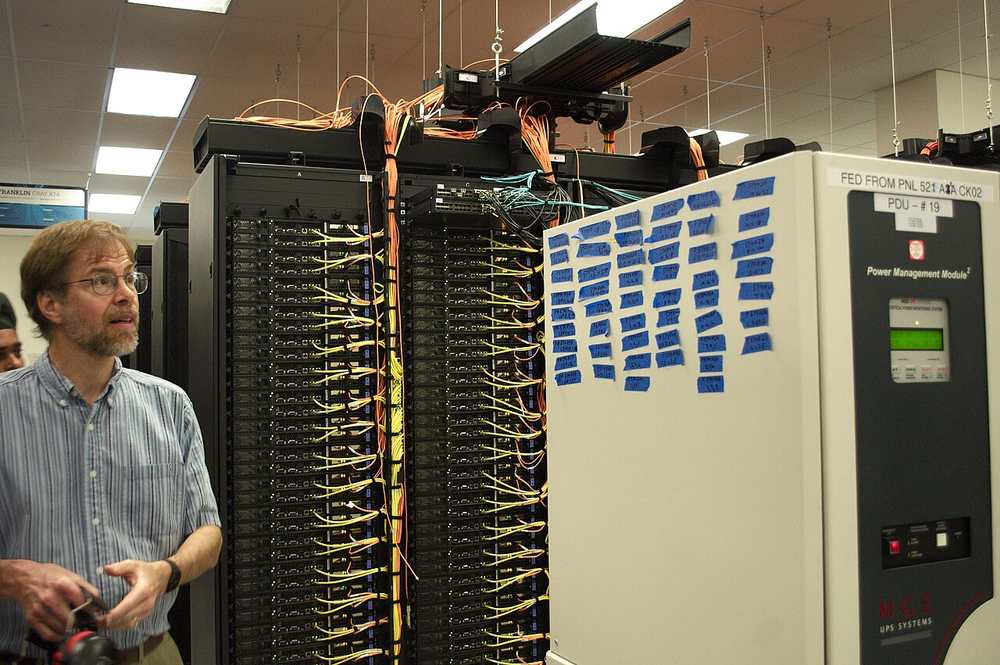
Placement is just as important as content. Labels should be visible without removing panels or covers, and they should be positioned where a technician would naturally look—near the breaker handle, not on the inside of the door. Use durable, legible materials that won't fade or peel in a warm environment. And don't forget the label on the outside of the cabinet that lists the main feed and emergency disconnect. That's the first thing a firefighter or first responder will look for.
Label Content Checklist
- Unique circuit identifier (e.g., CKT-12) that matches the one-line diagram
- Rated amperage and voltage (e.g., 20A / 208V)
- Load description (equipment or rack name)
- Source panel and breaker number (e.g., PDU-B, Breaker 14)
- Phase and pole configuration (e.g., L1-L2, 3-phase)
- Date of installation or last verification
- Emergency disconnect location on the cabinet exterior
Some operators also add a barcode or QR code that links to the digital record. That's a nice touch, but it should never replace a physical label. If the scanner is down, you still need to read the information directly.
Documents That Support Labeling: One-Line Diagrams and Load Maps
Labels alone aren't enough. They need to be backed by accurate documentation, starting with a one-line diagram (also called a single-line diagram) that shows the entire power path from the utility feed down to each outlet. In a modular data center, this diagram should be updated every time a circuit is added, removed, or re-purposed. The diagram is your map; the labels are the street signs. If they don't agree, you're lost.
A load map is another critical document. It lists every load in the cabinet, its power draw, and which circuit it's connected to. This helps with capacity planning and prevents overloading a breaker. When you're planning to add a new server, you check the load map to see if there's headroom. Without it, you're guessing—and guessing can trip a breaker or worse, cause a thermal event.

These documents should live both in a physical binder near the cabinet and in a digital format that's accessible to all authorized staff. But digital copies have a way of becoming stale. That's why the labeling standard should include a revision date and a process for updating the documents whenever the physical setup changes. In practice, this means assigning someone to own the documentation. It's a role that's easy to overlook, but it pays off in the long run.
Periodic Verification: Keeping Labels and Reality in Sync
Labels and documents drift. A technician might temporarily reroute a circuit and forget to update the label. A new load gets added without a proper change record. Over time, the gap between what's written and what's actually there grows. That's why periodic verification is non-negotiable. At least once a year—or more often in a fast-changing environment—you should physically check every label against the actual circuit and the one-line diagram.
Verification isn't just a visual check. It requires testing that each breaker actually controls the outlet it's supposed to control. That means switching off the breaker and confirming the load drops. It's a two-person job in most cases, and it should be done during a planned maintenance window. Yes, it takes time. But the cost of a mislabeled circuit during an emergency is far higher.
When you find discrepancies, correct them immediately. Don't wait for the next scheduled maintenance. A wrong label is worse than no label because it gives false confidence. Update the label, update the one-line diagram, and update the load map. Then note the change in your change log. This discipline is what keeps your modular data center circuit labeling trustworthy.
Safety Procedures Before Any Work on Labeled Circuits
Labels support safety, but they don't replace it. Before any work on a circuit, follow a strict lockout/tagout (LOTO) procedure. That means identifying the correct breaker from the label, switching it off, applying a lock and tag, and then testing to verify that the circuit is dead. Even if the label says "Outlet 4," you still test. Electrical safety is about verification, not assumption.
Another point: never rely solely on the label to tell you which circuit is which. Use a voltage tester or a circuit tracer to confirm. In modular data centers, circuits can be routed in unexpected ways, especially if the cabinet has been reconfigured. A tracer sends a signal through the wire and lets you identify the exact breaker at the panel. It takes a few extra minutes but can prevent a serious accident.
- Identify the circuit from the label and the one-line diagram.
- Notify affected personnel and follow your facility's LOTO procedure.
- Switch off the breaker and apply a lock and tag.
- Test for absence of voltage using a rated voltage tester.
- If the test shows no voltage, proceed with work; if not, re-verify the circuit source.

Remember that labeling standards are not just for your own team. If you're handing over a modular data center to a client or a third-party maintenance provider, the quality of your labeling and documentation is part of the deliverable. Incomplete or inconsistent labels can lead to contractual disputes or, worse, safety incidents. So treat labeling as an engineering requirement, not an afterthought.
How VERHI Approaches Circuit Labeling in Modular Solutions
At VERHI, we design modular data center solutions with electrical safety in mind. That includes clear, consistent circuit labeling on every cabinet and PDU we ship. We also provide documentation that supports safe operation and maintenance. While specific label formats can vary based on customer requirements, our goal is to make sure that anyone who opens a VERHI cabinet—whether in Houston, Frankfurt, or Almaty—can quickly and safely understand the electrical layout.
We also encourage customers to adopt a labeling standard that aligns with their own facility practices. If you already have a numbering scheme, we can match it. The key is that the labels are consistent, legible, and backed by accurate documentation. That's what makes modular data center circuit labeling effective. And when you're scaling out multiple cabinets, that consistency becomes even more critical.
Specifications, standards, and labeling formats can change based on project requirements and local regulations. Buyers should confirm details with VERHI or the official source before ordering to ensure compliance with their specific needs.
Frequently Asked Questions
What is the minimum information that should appear on a circuit label in a modular data center cabinet?
At minimum, a circuit label should include a unique circuit identifier, the rated amperage and voltage, the load it serves, and the source panel and breaker number. This allows a technician to quickly trace the circuit and understand its capacity.
How often should circuit labels be verified in a modular data center?
At least once a year, but more frequently if the cabinet configuration changes often. Verification should include a physical check of each label against the actual circuit and the one-line diagram, including testing that the breaker controls the correct outlet.
Can I use QR codes instead of physical labels on circuit breakers?
QR codes can supplement physical labels, but they should not replace them. Physical labels are always accessible and don't require a scanner. If you use QR codes, ensure the physical label still contains the essential information.
What should I do if I find a mislabeled circuit?
Correct it immediately. Update the label, the one-line diagram, and the load map. Then record the change in your change log. A wrong label is dangerous because it gives false confidence.
Does VERHI provide labeling services for existing cabinets?
VERHI can provide guidance and support for labeling standards on new and existing modular data center solutions. Contact our team to discuss your specific requirements.
Need help standardizing circuit labeling in your modular data center? Talk to VERHI's engineering team to ensure your cabinets meet safety and documentation best practices.
This article is based on VERHI's internal engineering practices and general industry knowledge about electrical safety in modular data centers. No external sources were used.