

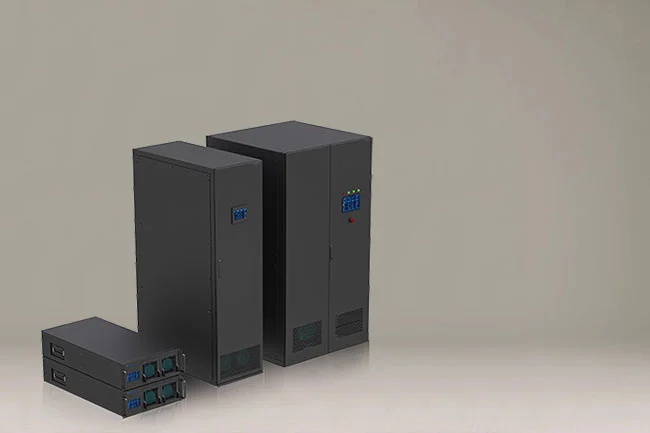
When a space cannot tolerate even a degree of drift in temperature or a few percentage points of humidity variation, standard comfort cooling is no longer sufficient. Precision air conditioners—often called constant temperature and humidity units or close-control air conditioners—are purpose-built to maintain an unwavering indoor climate while continuously filtering the air. They are deployed wherever environmental stability is non-negotiable: computer rooms and data centers, laboratories, museums, archives, electrical substations, power distribution rooms, equipment rooms, currency printing facilities, wine cellars, and other sensitive sites. Understanding how these machines are constructed, how their performance is measured, and what design features set them apart is essential for anyone responsible for a mission-critical facility.
Two Interlinked Cycles That Define the System
A precision air conditioning unit achieves its tight control through two cooperating circuits that work in parallel and in sequence.
The first is the refrigeration cycle, which provides the cooling capacity. Its job is not simply to lower temperature; it must extract heat continuously at a rate that exactly offsets the real-time thermal load generated by equipment, lighting, and the building envelope. As a by-product, the cold evaporator coil also condenses moisture from the return air stream, performing dehumidification. This dual capability—sensible cooling and latent heat removal—allows the unit to maintain temperature while also keeping humidity within a narrow window.

The second is the air circulation cycle, which addresses everything beyond raw temperature: humidity uniformity, air cleanliness, and airflow velocity. Conditioned air must travel from the unit through a network of ducts or a raised-floor plenum and reach every corner of the space in an orderly, well-distributed manner. Without careful air handling, cold air short-circuits back to the return, hot spots form, and the precise work of the refrigeration cycle is undercut. The air handling section typically includes the supply fan, filtration stages, and sometimes a dedicated humidifier, all coordinated to deliver laminar, well-mixed air that meets the required cleanliness class.


Performance Metrics That Separate Precision from Ordinary
Choosing and operating a precision unit requires literacy in a handful of key performance indicators, each describing a different dimension of the machine’s capability.
Total cooling capacity is the sum of sensible and latent heat removed under standardized test conditions, expressed in kilowatts. It serves as the primary sizing reference. Sensible cooling capacity isolates the portion of heat removal that actually lowers air temperature without condensing moisture. In data centers and equipment rooms, nearly all the heat generated is sensible—servers do not perspire—so this figure directly reflects how well the unit copes with electronics loads. The sensible heat ratio (SHR) is the quotient of sensible capacity divided by total capacity. A higher SHR, typically above 0.90 in well-designed close-control units, indicates that the machine is optimized to fight dry heat, minimizing unnecessary dehumidification and the energy wasted to re-humidify air afterwards.
The coefficient of performance (COP) measures refrigeration efficiency at the compressor level, defined as net cooling output divided by compressor shaft power. In precision applications, a COP greater than 3.3 is expected. The energy efficiency ratio (EER) extends the efficiency view to the entire unit by dividing total cooling capacity by total electrical input—fans, controls, and all. When expressed in British thermal units per watt-hour, a threshold of 11.5 BTU/Wh is typical for high-efficiency units, equivalent to a COP of roughly 3.37. Together, COP and EER quantify how much useful cooling is obtained for every unit of electricity consumed, a calculation that directly feeds into lifetime operating cost.

High Airflow and Low Enthalpy Difference
Precision units are intentionally designed for high airflow with a small temperature difference across the coil—a configuration known as large volume, low delta-T. Instead of chilling air aggressively and blasting it into the room, these systems move generous quantities of air that leave the coil only a few degrees colder than the return. This approach matches the sensible-heavy load profile of electronics, prevents localized overcooling, and maintains an even, gentle temperature field. It also keeps the evaporator coil temperature high enough to avoid excessive dehumidification, preserving the room’s humidity balance with less energy-intensive re-humidification.
Flexible Air Distribution Patterns
Because electronic equipment cooling demands compatibility with existing rack layouts and room geometries, precision air conditioners offer multiple air delivery and return configurations. The most common are:
1. Top discharge via plenum cap: Suitable for small to medium rooms where supply air needs to be thrown no more than 15 meters. The unit sits on the floor and sends air upward through a directional cap, creating a gentle ceiling-level circulation.
2. Top discharge via ductwork: Designed for larger rooms or those with higher cooling demands, this method uses ceiling ducts to carry air precisely to targeted areas. It supports longer throws and is the go-to choice when floor distribution is impractical.
3. Underfloor supply: When the raised floor offers a clear height exceeding 300 millimeters, supply air is pressurized into the floor plenum and released through perforated tiles in front of equipment racks. This direct-to-rack approach supports throw distances up to 20 meters per unit and is strongly recommended for high-density spaces where the floor-area heat load exceeds 500 watts per square meter.
Return air configurations—top, bottom, or side—are selected to complete the circulation loop efficiently and to avoid mixing hot exhaust with cold supply streams.
Diverse Cooling Methods to Suit Any Site
One of the defining characteristics of precision air conditioners is the availability of multiple cooling methods, allowing the system to be matched to site-specific resources, ambient conditions, and physical constraints.
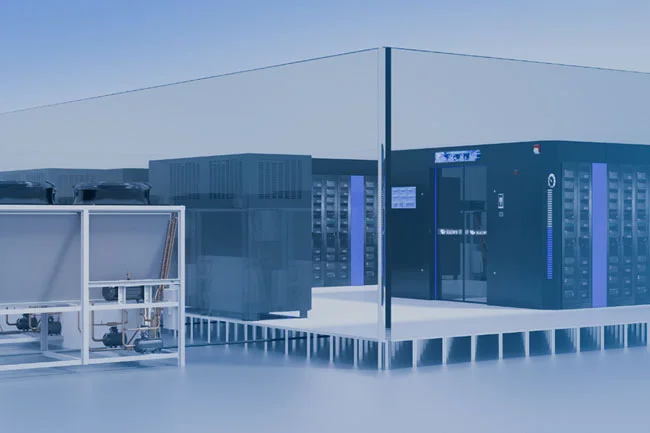
- Air-cooled systems are the preferred default. They reject heat to outdoor air via a remote condenser. Standard installation limits are a total refrigerant line length under 60 meters, an outdoor unit no more than 5 meters below the indoor unit, and no more than 20 meters above it. These boundaries keep refrigerant pressure drops and oil return within safe margins.
- Water-cooled systems rely on a continuous supply of cooling water. They are used when the line-length or elevation limits of air-cooled equipment cannot be met, or when a reliable cooling tower or chilled-water loop is already present. However, in regions where winter freezing is common, they require careful freeze protection and are generally discouraged unless the water circuit can be guaranteed frost-free.
- Glycol-cooled systems replace the outdoor condenser with a fluid cooler that circulates a water-glycol mixture. Because the mixture resists freezing, this method is ideal for northern climates where winter temperatures regularly dip below freezing and where the distance between indoor and outdoor units exceeds air-cooled limits.
- Glycol natural cooling (free cooling) adds a control strategy on top of the glycol loop. When outdoor air is sufficiently cold, a three-way valve diverts the glycol to an auxiliary coil inside the unit, bypassing the compressor entirely or partially. This harvests free cold energy and can slash compressor running hours by thousands per year.
- Chilled-water systems use cold water supplied by a central plant. If the building already produces chilled water year-round, using it for precision cooling can be highly economical, eliminating on-board compressors and their maintenance.
- Dual-coolant systems combine two sources—typically a central chilled-water coil and a direct-expansion refrigerant circuit—in one unit. This allows automatic or manual switching between the primary and backup cooling source, often using chilled water in winter for natural cooling and the direct-expansion circuit in summer, or providing redundant cooling paths for ultimate reliability.
Progressive Filtration for Air Purity
Standard precision air conditioners are fitted with primary and medium-efficiency filters that capture dust and particulates harmful to electronics. For spaces requiring cleaner air—such as pharmaceutical labs or clean manufacturing suites—units can be designed with a mechanical frame that accepts a final-stage HEPA or sub-HEPA filter. This upgrade path enables the same platform to meet a wide range of cleanliness standards without custom chassis work.
Engineered for Continuous, Year-Round Operation
Data centers and critical equipment rooms do not close for the weekend, and neither can their cooling. Precision units are designed from the ground up for 24-hour, 365-day duty. Unlike comfort air conditioners that struggle to cool when outdoor temperatures drop, close-control units incorporate features that stabilize condensing pressure in low ambient conditions. Standard air-cooled models reliably cool even when the outdoor thermometer reads -15°C. Glycol-cooled systems push that boundary further, operating stably at outdoor temperatures as low as -45°C. This year-round cooling capability is not an add-on; it is embedded in the system architecture.
Design Point Tuned to the Real Operating Window
The tight environmental band required by sensitive electronics—typically 20°C ± 2°C in winter and 23°C ± 2°C in summer—becomes the exact design point around which the entire refrigeration circuit is optimized. Compressor capacity, coil face area, airflow rate, and expansion valve selection are all coordinated so that the unit operates at peak efficiency exactly where it will spend its entire life. This targeted design eliminates the mismatch that occurs when comfort units, which are optimized for 35°C outdoor ambient and a broad indoor setpoint range, are forced into narrow mission-critical duty.
Durability and Lifetime Expectations
Precision air conditioning equipment is mechanically overbuilt for longevity. The design life is typically 10 years of continuous operation, corresponding to roughly 86,400 running hours. Mean time between failures (MTBF) often exceeds 25,000 hours. In practice, with a clean installation environment and a disciplined preventive maintenance program—regular filter changes, coil cleaning, belt inspections, and refrigerant checks—these units routinely reach 15 years of dependable service. That extended lifespan transforms a well-informed purchase into a long-term asset, protecting capital budgets and avoiding the disruption of early replacement cycles.

In every critical environment, the cooling system serves as the silent guardian of uptime and quality. Precision air conditioners earn their name not through a single feature but through the deliberate integration of a stable refrigeration cycle, high-efficiency air distribution, granular filtering, and an unyielding design for non-stop operation. Understanding their composition, performance metrics, and range of available configurations allows facility managers and engineers to move beyond guesswork and select a system that will hold the line, day after day, year after year.