


Laboratories, metrology rooms, and precision manufacturing floors are unforgiving environments. A half-degree temperature swing or a few percentage points of humidity drift can ruin a batch of pharmaceutical samples, distort interferometer measurements, or induce thermal expansion in machine tools that scrap precision parts. In these spaces, environmental control is not about keeping people comfortable—it is about protecting processes, instruments, and products whose tolerances are measured in microns and millikelvins. This is why the conventional split or packaged air conditioner that works perfectly well in an office corridor cannot simply be transplanted into a laboratory. The demands are fundamentally different, and a different category of equipment—the precision air conditioner, also called a close-control unit or constant temperature and humidity air conditioner—has evolved specifically to meet them. Understanding the engineering distinctions between these two classes of cooling clarifies why precision units consistently outperform comfort cooling in sensitive applications, and how they deliver long-term stability, energy efficiency, and cleanliness.
High Airflow, Low Enthalpy Difference: A Purpose-Built Thermal Approach
The most fundamental design departure lies in the air volume moved and the temperature change imparted to that air. A comfort air conditioner is designed to cool a room occupied by people, where a significant portion of the load is latent heat—moisture released by occupants and fresh air infiltration. To remove this moisture, the unit must pull the evaporator coil temperature well below the dew point of the return air, forcing condensation. The resulting supply air is cold, often 12 to 14°C, and the volumetric airflow is relatively low, typically yielding an air change rate of 10 to 15 air changes per hour in a standard office. This creates a large enthalpy difference, or delta-T, across the coil: the air is substantially cooled and dehumidified in one pass.

Precision air conditioners invert this logic. The internal heat load in a laboratory or data center is overwhelmingly sensible—generated by analytical instruments, lasers, ovens, computers, and lighting. There is minimal latent load from people, and outside air intake is usually tightly controlled. Consequently, the cooling coil does not need to wring moisture from the air. By increasing the airflow dramatically—often to double the cubic meters per hour of a comfort unit with the same nominal cooling capacity—the precision unit reduces the temperature drop across the coil to just 4 to 6°C. The supply air temperature stays safely above the room dew point, so no condensation occurs on the coil under normal operation. All the electrical energy that drives the compressor goes into lowering the sensible temperature of the space, not into phase-changing water vapor. The result is an exceptionally high sensible heat ratio (SHR)—typically above 0.95—compared to the 0.65 to 0.75 SHR of a comfort unit operating at design conditions. For laboratories, where a stable humidity setpoint is crucial, this means the air conditioning system is not constantly stripping moisture and then requiring energy-intensive re-humidification to correct the imbalance.


How Elevated Evaporator Temperature Improves Efficiency and Stability
Because the high-airflow design permits the evaporator to operate at a higher saturation temperature—often in the range of 7 to 11°C, above the expected return air dew point—the refrigeration cycle itself becomes more efficient. The compressor’s suction pressure rises, its pressure ratio drops, and the coefficient of performance (COP) increases. In practice, for every 1°C increase in evaporator temperature, the COP improves by approximately 2 to 4 percent, depending on the compressor type and condensing conditions. A comfort unit, forced to operate with an evaporator temperature around 3 to 5°C to satisfy latent loads, permanently sacrifices this thermodynamic advantage. The precision air conditioner, by contrast, runs in an optimized window where it rarely, if ever, needs to cross the dew-point threshold. This not only saves energy but also keeps the humidity within a narrow, predictable band without continuous intervention. For laboratory managers, this translates directly into lower electricity bills and fewer alarms from humidity excursions.




Creating a Uniform Thermal Environment Through Superior Air Distribution
Temperature uniformity is as important as the average temperature. Comfort air conditioners, with their modest airflow and single-direction throw, tend to cool the area immediately in front of the supply grille while leaving far corners untouched. Temperature stratifications of 3 to 5°C between floor and ceiling or between near-rack and far-wall zones are common. In a laboratory, such unevenness can cause equipment calibration drift and condensation on cold surfaces, or it can force some instruments to overheat while others are overcooled.
Precision units overcome this by moving enough air to turn over the entire room volume 30 to 60 times per hour, depending on load density and ceiling height. High-efficiency backward-curved plenum fans or electronically commutated (EC) fans push conditioned air through a carefully designed duct network or a raised-floor plenum, creating a gentle, pervasive circulation that washes every corner of the space. The return path is similarly engineered—often through a dropped ceiling return plenum or dedicated return ducts—so that hot air is captured before it mixes with the cold supply. The result is a spatial temperature variation that can be held within ±0.5°C or better across an entire room, even as local heat sources fluctuate. This uniform temperature field is essential for incubators, analytical balances, and dimensional metrology equipment that assume a stable thermal reference.
Maintaining Air Cleanliness with Continuous High-Efficiency Filtration
Laboratories and clean manufacturing environments impose strict limits on airborne particulate matter. A standard comfort unit typically carries a coarse panel filter, rated at best G3 or G4 (ASHRAE MERV 6-8), which captures only larger dust and fibers. With low airflow rates, these units cannot effectively sweep fine particles out of the occupied space; they allow dust to settle on optical surfaces, clog instrument cooling fans, and contaminate sensitive samples.
Precision air conditioners are built to accept a progressive filtration train. At a minimum, a primary G4 filter is followed by a secondary F7 to F9 (MERV 13-15) bag filter. The high air change rate ensures that the entire room air volume passes through these filters dozens of times per hour, dramatically reducing the particle count. When the application requires it—ISO Class 7 or 8 cleanrooms, for example—a final-stage HEPA filter can be accommodated in the unit or in the supply duct, delivering air that meets semiconductor or pharmaceutical cleanliness standards. The filtration is effective precisely because the airflow is large; a small, sluggish stream of clean air cannot compensate for the particulate generated inside a bustling laboratory.
Year-Round Reliable Cooling in Every Season
Comfort air conditioners are designed for a cooling season. When outdoor temperatures fall below about 15°C, the condensing pressure in a standard split system drops to a point where the expansion device can no longer maintain a stable superheat, and the unit either cycles erratically or refuses to start altogether. Yet laboratories require cooling 365 days a year. The equipment inside never stops generating heat, and many processes are exothermic regardless of the season.

Precision air conditioners solve this with integrated low-ambient control. In air-cooled models, a head pressure control system—using variable-speed condenser fans, flooded condenser head pressure control valves, or both—maintains a consistent condensing pressure even when the outdoor air is as cold as -15°C or lower. Glycol-cooled and chilled-water systems push this capability even further, extracting heat reliably in sub-zero conditions. This year-round cooling capacity is not an optional add-on; it is designed into the refrigeration circuit and control logic from the outset, ensuring that a laboratory never experiences a warm-weather shutdown just because it snowed outside.
BetterPac Precision Air Conditioning: Engineered to Fit the Laboratory Load Profile
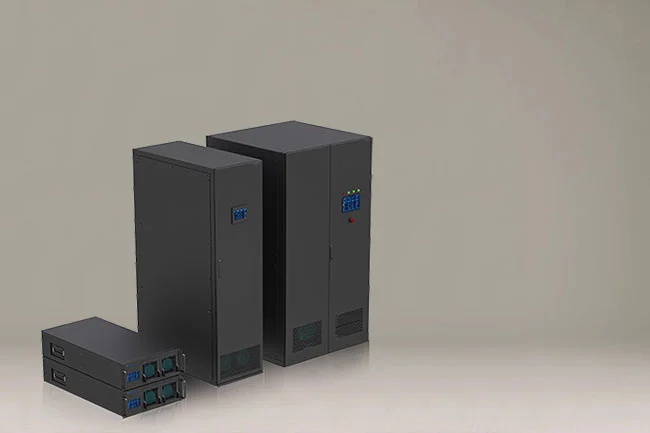
The performance data and design philosophy described above are embodied in products engineered for the exacting demands of modern laboratories. Take, for example, the approach of BetterPac, a brand under EnergyCat that specializes in close-control climate solutions. A BetterPac constant temperature and humidity unit operating with the same nominal cooling capacity as a standard comfort air conditioner moves approximately twice the air volume, which halves the coil delta-T. This allows the unit to operate almost continuously with its evaporator surface temperature above the room air dew point, eliminating unnecessary dehumidification. By raising the effective evaporator temperature through increased suction pressure, the system captures a measurable gain in thermal efficiency and running economy. The high airflow, in turn, holds laboratory temperature and humidity remarkably stable, because the large thermal inertia of the moving air mass damps out small load fluctuations that would otherwise trigger rapid compressor cycling.

BetterPac units also integrate precision control over temperature, humidity, and filtration in a single package. Sensors with tight accuracy tolerances feed a microprocessor-based controller that modulates the compressor, electric reheat stages, and steam-generating humidifier with PID logic, maintaining setpoint within ±0.1°C and ±1-2% relative humidity in critical environments. For laboratories with unusual geometries or high-density heat loads, the units can be customized with alternate supply air configurations, upgraded filtration, and remote monitoring via BACnet or Modbus—making them a purposeful tool rather than a generic appliance. This kind of application-focused engineering ensures that the equipment inside the lab stays cool, the measurements stay repeatable, and the staff works in a stable, comfortable, and safe environment.

The choice between a comfort air conditioner and a precision air conditioner is not a choice between two similar boxes with different stickers. It is a decision about whether the cooling system will fight the thermal physics of the space or work in harmony with it. For any laboratory, testing suite, or precision production area where temperature stability, humidity control, and cleanliness are part of the qualification criteria, a high-airflow, high-SHR, tightly controlled precision air conditioner is not an upgrade—it is the foundation on which reliable operation is built.